 SinoXiv
The World’s “oldest Octopus” Was Never an Octopus
Abstract
Body
A well-known 300-million-year-old fossil once believed to be the oldest octopus ever discovered has been reclassified after new analysis revealed it is something entirely different. The specimen had even earned a place in the Guinness Book of Records, but scientists now say that distinction was based on a misinterpretation.
The confusion traces back to events that happened long before the fossil formed. As the animal decayed hundreds of millions of years ago, its body changed in ways that later made it resemble an octopus when preserved in rock.
>Advanced Imaging Reveals Hidden Teeth>
Researchers used cutting-edge synchrotron imaging to examine the inside of the fossil in detail. This powerful technique allowed them to detect tiny structures that cannot be seen with the naked eye. Inside the rock, they found small tooth-like features that changed everything.
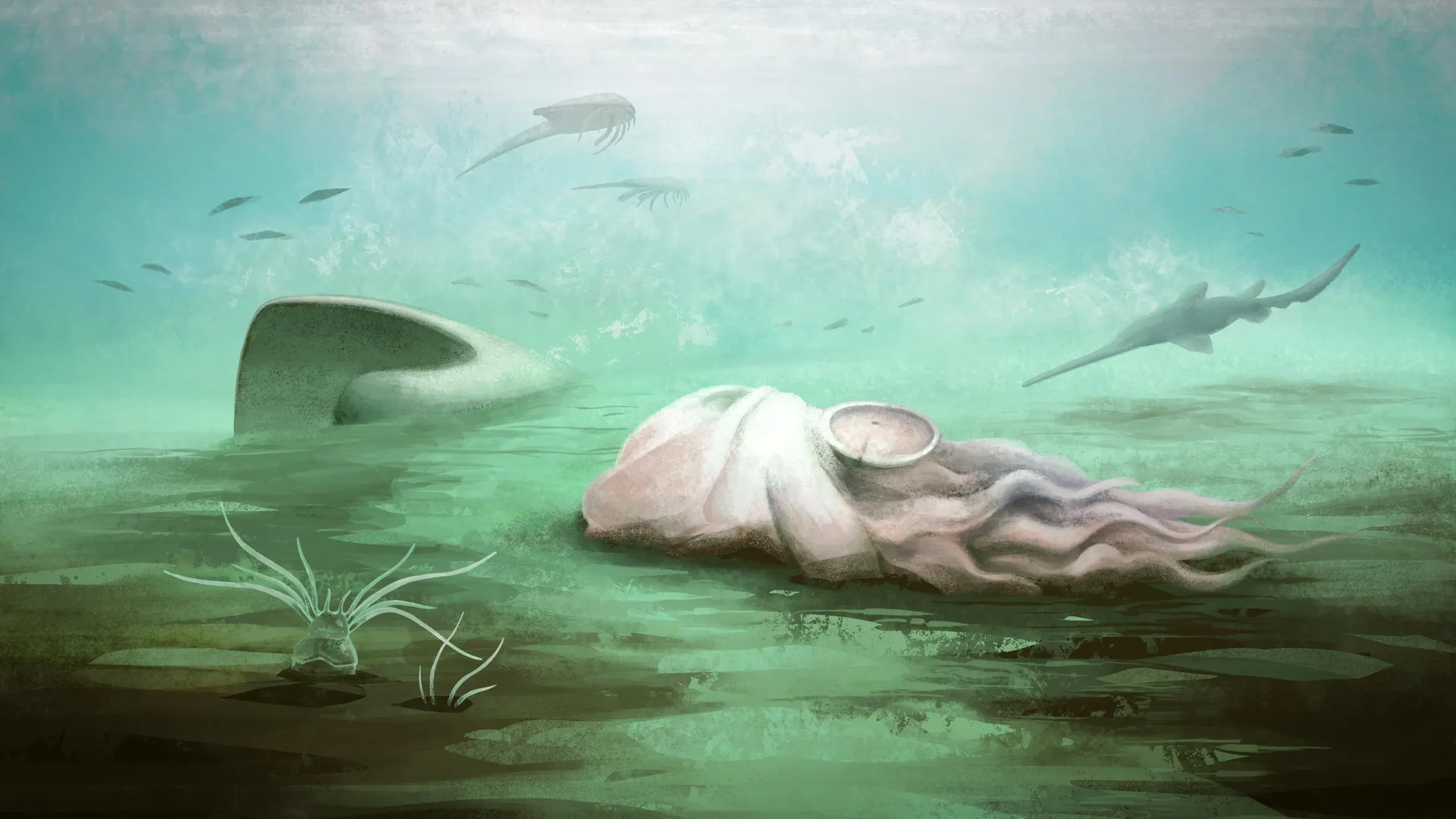
The fossil, known as Pohlsepia mazonensis, is not an octopus. Instead, it belongs to a group related to modern Nautilus, marine animals that have multiple tentacles and a distinctive external shell.
The findings, published today (April 8, 2026) in >Proceedings of the Royal Society B>, resolve a long-standing mystery about octopus evolution that has puzzled scientists for decades. The discovery also provides the earliest known example of preserved soft tissue from a nautiloid and removes the fossil's status as the "oldest octopus" from the record books.
>Decay Led to a Scientific Misidentification>
Dr. Thomas Clements, lead author and Lecturer in Invertebrate Zoology at the University of Reading, said: "It turns out the world's most famous octopus fossil was never an octopus at all. It was a nautilus relative that had been decomposing for weeks before it became buried and later preserved in rock, and that decomposition is what made it look so convincingly octopus-like.

