 SinoXiv
Earth’s Most Powerful Ocean Current Didn’t Form the Way We Thought
Abstract
Body
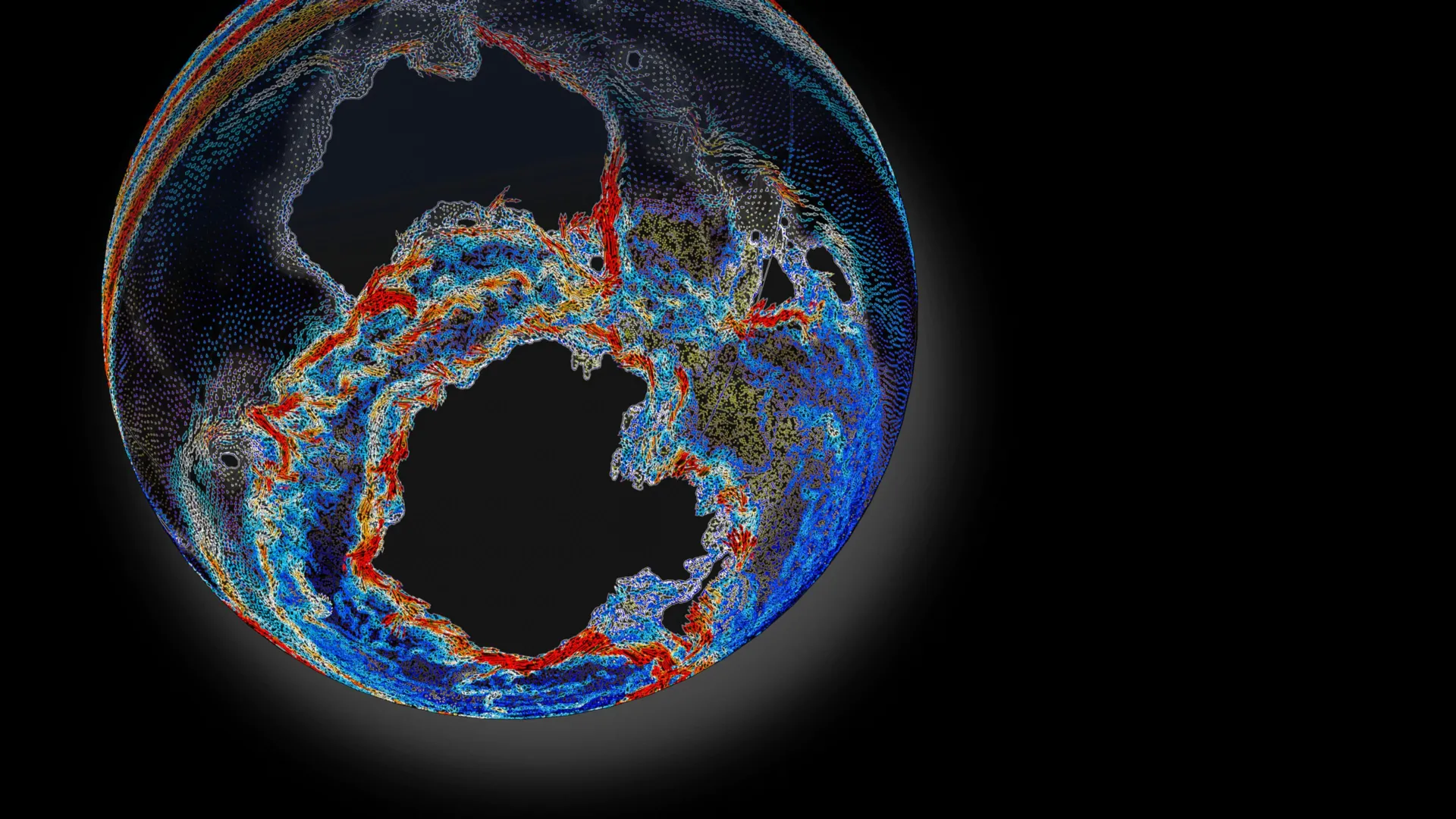
The Antarctic Circumpolar Current carries more than 100 times the total flow of all the world's rivers combined. It circles Antarctica without being blocked by land, making it one of the most important drivers of the global climate system. New research published in the journal >Proceedings of the National Academy of Sciences> explores how and when this immense current first developed. The findings reveal that simply opening ocean gateways between Antarctica, South America, and Australia was not enough to create it.
Around 34 million years ago, Earth experienced a dramatic transformation during the transition into the Oligocene -- shifting from a warm greenhouse world with little ice to a cooler icehouse climate marked by expanding polar ice sheets. During this period, ocean passages between Antarctica, Australia, and South America widened and deepened. At the same time, the Antarctic Circumpolar Current (ACC) began to take shape, and the Antarctic Ice Sheet started forming.
Atmospheric CO2 levels were about 600 ppm back then. This level has not been reached again since, although some future climate scenarios suggest it could be surpassed by the end of this century. "In order to predict the possible future climate, it is necessary to look into the past with simulations and data to understand our Earth in warmer and more CO2-rich climate states than today," says Hanna Knahl, climate modeller at the Alfred Wegener Institute, Helmholtz Centre for Polar and Marine Research (AWI) and lead author of the study, which now appears in the >Proceedings of the National Academy of Sciences> (>PNAS>). "But careful, the climate of the past can of course not be projected 1:1 onto the future. Our study shows that the circumpolar current in its 'infancy' influenced the climate very differently than today's fully developed ACC does."
>Reconstructing the Birth of the Antarctic Circumpolar Current>
To understand how the ACC formed, Knahl and her team ran detailed climate simulations based on Earth's geography about 33.5 million years ago, when Australia and South America were positioned much closer to Antarctica. The researchers combined these simulations with an Antarctic Ice Sheet model from a 2024 >Science> study>, linking it with ocean, atmosphere, and land systems to track how currents evolved.
The modeled results were then compared with geological reconstructions from the same time period, allowing the team to test how well their simulations matched real-world evidence.
>The Key Role of Winds and Shifting Continents>
The results highlight the importance of the Tasman Gateway, a seaway between Antarctica and Australia. "There were already indications that the wind in the Tasman Gateway played an important role in the formation of the ACC. Our simulations can clearly confirm this: Only when Australia had moved further away from Antarctica and the strong westerly winds blew directly through the Tasman Gateway, the current could fully develop," Knahl explains.

