 SinoXiv
This Tiny Implant Sends Secret Messages to the Brain
Abstract
Body
In a major step forward for neurobiology and bioelectronics, scientists at Northwestern University have created a wireless device that uses light to transmit information directly into the brain. The technology bypasses traditional sensory routes in the body and instead delivers signals straight to neurons.
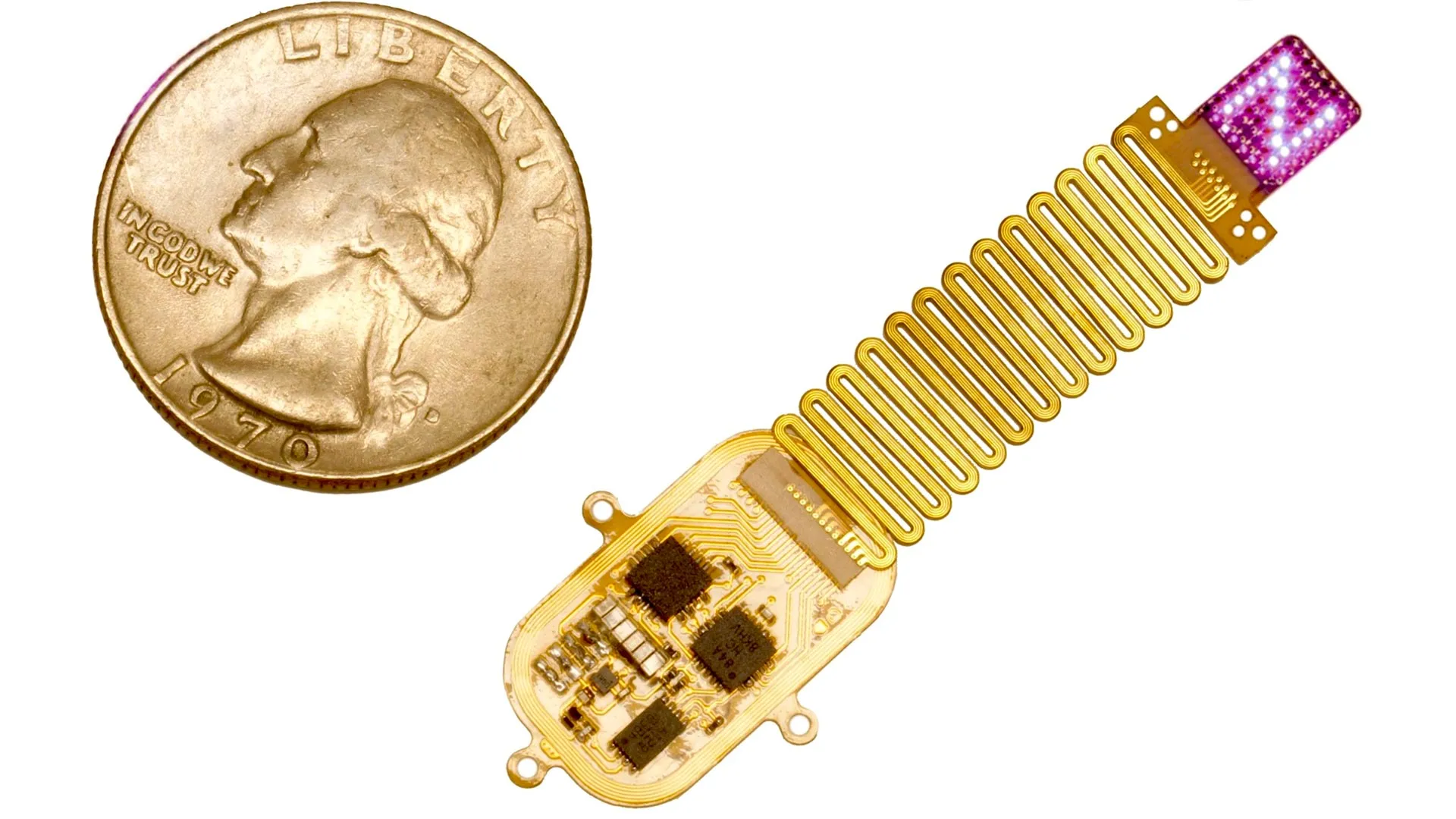
The device is soft and flexible, fitting beneath the scalp while resting on the skull. From this position, it sends carefully controlled light patterns through the bone to activate specific groups of neurons across the cortex.
Light-Based Brain Signals in Animal Models
During testing, researchers used tiny, precisely timed bursts of light to stimulate targeted populations of neurons deep in the brains of mouse models. (These neurons are genetically modified to respond to light.) The mice quickly learned to interpret certain patterns as meaningful cues. Even without sound, sight or touch, the animals used the incoming information to make decisions and complete behavioral tasks accurately.
This technology could one day support a wide range of medical applications. Potential uses include providing sensory feedback for prosthetic limbs, delivering artificial inputs for future hearing or vision prostheses, controlling robotic limbs, improving rehabilitation after injury or stroke, and modifying pain perception without medications.
The work will appear Monday (Dec. 8) in Nature Neuroscience.
Creating New Brain Signals With Micro-LED Technology
"Our brains are constantly turning electrical activity into experiences, and this technology gives us a way to tap into that process directly," said Northwestern neurobiologist Yevgenia Kozorovitskiy, who led the experimental portion of the study. "This platform lets us create entirely new signals and see how the brain learns to use them. It brings us just a little bit closer to restoring lost senses after injuries or disease while offering a window into the basic principles that allow us to perceive the world."

