 SinoXiv
Scientists Discover Hidden Forces Are Warping Earth Deep Beneath the Surface
Abstract
Body
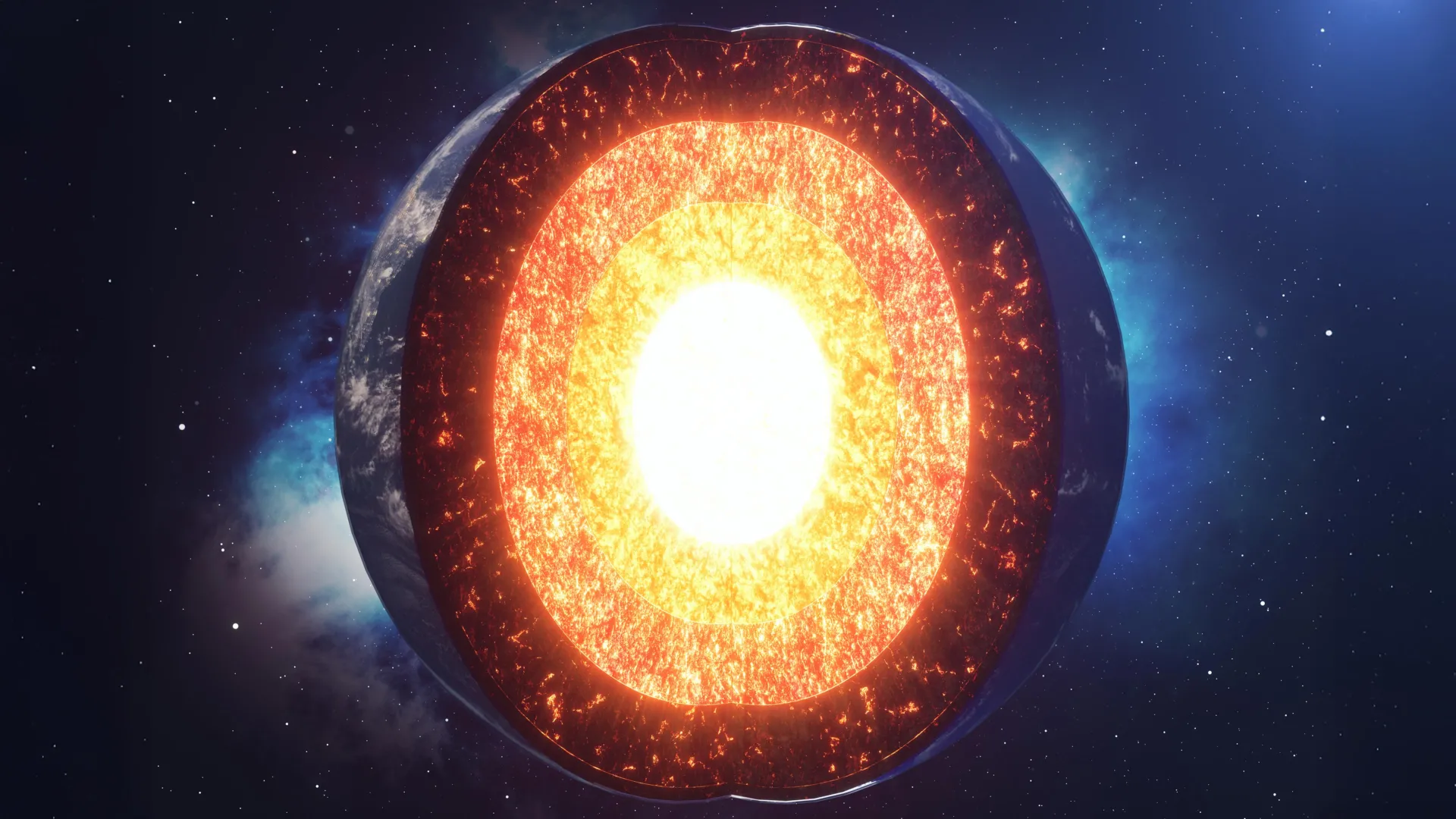
Far beneath Earth's surface, slow-moving convection currents churn within the mantle. These currents are closely tied to the movement of tectonic plates, and they do more than just shift the plates above. They also stretch and distort the mantle material itself.
A new study published in >The Seismic Record> shows that much of this deformation in the deepest part of the mantle occurs in regions where scientists believe ancient tectonic slabs have sunk over millions of years.
>Global Map Reveals Deformation Near the Core>
Scientists had long suspected a connection between deep mantle deformation and these buried slabs, but this research provides the first global view. The team examined nearly 75% of the lowermost mantle, a layer located just above the core-mantle boundary about 2,900 kilometers (1,800 miles) below Earth's surface.
Jonathan Wolf of the University of California, Berkeley, and his colleagues built this global map using an enormous dataset. They gathered and analyzed more than 16 million seismograms from 24 data centers worldwide, creating one of the most comprehensive seismic datasets ever assembled.
>Seismic Waves Expose Hidden Structure>
When earthquakes occur, they generate shear waves that travel through Earth's interior. These waves move at different speeds depending on their direction and the properties of the material they pass through. This directional variation, known as seismic anisotropy, allows scientists to identify areas where the mantle has been deformed.

